
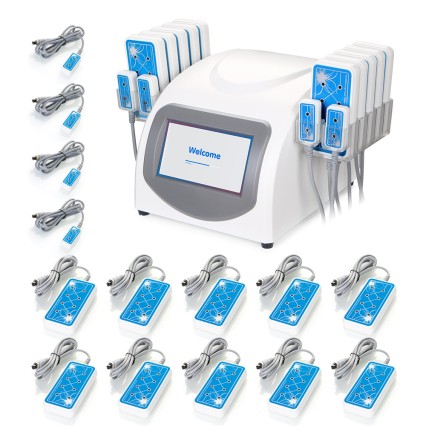

Ask anyone who’s tried spot-reducing belly fat with crunches alone and they’ll tell you it doesn’t work that way. Fat doesn’t disappear because you worked a muscle near it. That’s exactly the gap laser lipo technology was built to close, and it’s why med spas across Mexico have added it to their treatment menus faster than almost any other body contouring service.
I’ve watched clinic owners run their first laser lipo session on a skeptical client who’d already tried three fat-freezing rounds elsewhere with mixed results. Twenty minutes later, they were measuring a visible reduction around the flank. That’s not magic. It’s photobiomodulation, and once you understand the mechanism, the results make a lot more sense.
What a Laser Lipo Machine Actually Does
A laser lipo machine, called Máquinas de lipo láser in Spanish, emits low-level laser diodes, usually in the 635 to 650 nanometer range, directly onto the skin above targeted fat deposits. Unlike surgical liposuction, nothing pierces the skin.
The laser light penetrates a few millimeters into the subcutaneous layer and interacts with adipocytes, the cells that store fat. Early published work on low-level laser therapy for body contouring found that this wavelength triggers a temporary opening in the fat cell membrane. Triglycerides leak out into the surrounding interstitial space.
From there, your lymphatic system takes over. Over the following days and weeks, the body processes and clears the released fatty acids the same way it handles dietary fat, through normal metabolic pathways.
That’s the whole mechanism. No cell destruction, no scarring, no injected chemicals. Just a temporary membrane change that lets stored fat exit the cell.
Laser Lipo vs Cavitation vs Fat Freezing
Clinics that carry more than one body contouring modality get asked this constantly: which one should I actually recommend? Here’s how they stack up.
Most experienced estheticians don’t pick just one. Laser lipo pairs well with RF or vacuum therapy in the same session because the laser softens the fat cells right before mechanical or thermal techniques finish the job. That combination is why multi-function devices have become so common in Mexican clinics over the past two years.
Who Actually Gets Good Results
This isn’t a weight loss treatment, and any clinic that markets it that way is setting clients up for disappointment. Laser lipo works best on people who are already close to their target weight and dealing with a stubborn pocket that hasn’t responded to diet or exercise, think love handles, inner thighs, upper arms, or the area just above the knee.
A client with a BMI over 30 looking to lose 20 kilos isn’t a good candidate. A client five kilos from their goal weight with a flank that won’t budge? That’s the profile where laser lipo consistently delivers.
What to Look for When Buying a Laser Lipo Machine
If you’re outfitting a clinic, not every machine on the market performs the same. A few things actually matter.
Diode count and wavelength
More paddles mean faster full-body sessions. Confirm the wavelength sits in the clinically studied 635-650nm range, not a generic figure the manufacturer won’t specify.
Combination functionality
Standalone laser lipo units are becoming rare. Most professional buyers now choose multi-function platforms that pair laser diodes with RF, vacuum, or cavitation heads, since it lets a single machine serve more treatment protocols.
Certifications
CE certification is the baseline for importing aesthetic equipment into Mexico. FDA clearance adds credibility when marketing to clients who’ve done their homework.
After-sales support
Ask about warranty length and whether Spanish-language technical support exists. A machine that breaks down with no local support costs you appointments every day it’s out of service.
I’ve talked to enough clinic owners who bought the cheapest unit they could find and regretted it within six months. The paddles stopped calibrating correctly, and there was no one to call. Spend the extra money on a supplier who’ll actually answer the phone.
Frequently Asked Questions
Q: Is laser lipo painful?
A: No. Most clients describe a mild warming sensation. There’s no anesthesia required and no needles involved.
Q: How many sessions does it take to see results?
A: Typically 6 to 12 sessions spaced two to three days apart, depending on the treatment area and the client’s starting point.
Q: Can laser lipo tighten loose skin too?
A: Some tightening does occur because the laser stimulates collagen production, though it’s a secondary effect, not the primary purpose.
Q: Is laser lipo safe for darker skin tones?
A: Yes. Because it targets fat cells through wavelength absorption rather than heat-based pigment targeting, laser lipo is generally considered safe across skin tones, unlike some laser hair removal technologies.
Q: How does laser lipo compare to CoolSculpting?
A: Laser lipo uses light energy and shows gradual results over weeks with no discomfort. CoolSculpting freezes fat cells and can cause several days of numbness or tenderness during recovery.
The Real Question Before You Invest
The technology works, that part’s settled at this point with over two decades of published data behind it. The harder question for clinic owners is whether a standalone unit or a combination platform fits your patient volume and treatment mix better.
If body contouring is a small part of your service menu, a compact combination device probably makes more financial sense than a dedicated laser lipo system sitting idle half the week.